






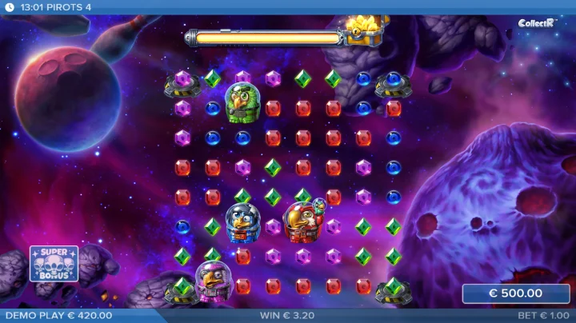
Pirots 4 Demo Slot In Canada: Practice
In Canada, test the game’s flow, controls, and pacing before using real money, with a calm routine built for adult players.
Play Pirots 4 Demo: What To Check First
A trial run works best when you treat it like a checklist, not a thrill ride. Imagine you open the game during a short break, tap around for two minutes, and still can’t explain what changed when you adjusted a setting - that’s a sign you’re moving too fast. Slow down, pick a goal for the session, and use the practice environment to learn how the game behaves on your device.
Start with the basics: how clear the screen feels, how quickly rounds resolve, and whether you tend to speed up when you’re excited. If you already know you get impatient, this is the moment to build a habit: read, decide, click. That tiny pause becomes your safety belt later.
A useful first session is also honest. If you notice your mood changing after a rough moment, don’t brush it off. Picture yourself thinking, “Just one more to balance it out,” even though you promised a short test. That’s the exact behavior you want to spot early, while nothing is at risk.
Pirots 4 Slot Demo: Controls, Speed, Comfort
Controls should feel obvious, but many players only realize what they don’t understand when they’re under pressure. Imagine you’re on mobile, a notification pops up, your thumb hits the wrong spot, and suddenly you’re not sure what you confirmed. In a practice run, you can pause, repeat, and rebuild confidence without panic.
Test one variable at a time. Change speed settings, play a few rounds, then switch back. If there are sound and animation options, try them deliberately and notice your concentration. Some adults play calmer with sound off; others need it to stay engaged. Either way, you want to learn what keeps you steady, not what makes you rush.
Also pay attention to misclick risk. If buttons feel too close together on your phone, that matters. The goal of a practice session isn’t only learning the game - it’s learning how you interact with it on the screen you actually use.
Pirots Demo 4: Building A Short Test Routine
A routine is what stops “quick try” from turning into “where did my evening go.” Imagine you tell yourself you’ll test for ten minutes, then you glance up and it’s been forty because the pace pulled you in. A routine prevents that drift.
Use a simple structure: five minutes to explore controls, five minutes to play normally, then a hard stop. After the stop, take thirty seconds to write one note (even mentally): what felt confusing, what felt smooth, and what triggered speed. That little recap is how adults turn a casual try into better decisions later.
If you want to be extra practical, do two mini sessions on different days. One when you’re fresh, one when you’re tired. You’ll learn more from that comparison than from any single long run.
Top casinos for playing Pirots 4 — current list
ALF Casino
Mafia Casino
SG Casino
Retro Bet
LeoVegas
Pirots 4 Demo Play: From Practice To Real Stakes
The biggest trap is thinking practice automatically prepares you for money play. It helps, but your brain behaves differently when stakes appear. Imagine you’re calm in free-play mode, then you switch to real money and feel your shoulders tighten. Suddenly you click faster, you read less, and small swings feel bigger. That shift is normal, but you can manage it if you plan for it.
In 2026, the adult approach is to rehearse habits, not just mechanics. Practice how you start a session: check your limits, decide your time cap, then begin. Practice how you end it too: stop while you still feel okay, not after you’re irritated. Ending cleanly is a skill, and it’s easier to build it when nothing is on the line.
Another practical step is learning your “tilt signals.” Maybe you start chasing after a bad streak. Maybe you increase speed to avoid boredom. Imagine noticing that your hand moves before your brain finishes the thought - that’s your cue to pause. You can’t fix what you don’t notice, and practice mode is where noticing is easiest.
Don’t rush the transition. If you’re planning to play with money, schedule it like a separate event, not an impulse. A short practice session today, then a real session tomorrow with a clear budget, is often safer than switching modes mid-evening when your attention is already low.
Turning A Trial Into Adult-Only Habits
The simplest habit is the “one-breath rule.” Imagine you finish a round and you want to click instantly again. Instead, take one breath, glance at the screen, and confirm you’re still choosing. That sounds almost too simple, but it’s surprisingly powerful for preventing autopilot.
Next habit: stop after frustration, not after excitement. Many adults can stop when they’re happy. The tricky moment is when you’re annoyed and want to “fix” the session. Picture yourself thinking, “I can’t end on that,” and then pushing longer than planned. Make a rule in advance: if irritation shows up twice in a row, take a timeout.
Finally, treat limits as part of the game setup, not a punishment. Set a time reminder and a spending cap that matches your real life. If your limits are unrealistic, you’ll ignore them. If they’re realistic, they become a quiet structure that keeps the game fun instead of tense.
Getting Started In Canada Without Rushing
Availability matters, but so does how you enter. If a platform is accessible in Canada, that doesn’t mean every session will feel smooth by default - you still need a clean setup. Imagine you’re eager to try the game, you open five tabs, your browser auto-fills old data, and you start juggling logins across devices. The result is confusion, and confusion is where mistakes happen.
Pick one device for your first serious test. Desktop is often easier for reading settings; mobile is convenient but easier to mis-tap. If you’re going to use mobile long-term, do your first learning session on mobile too, but make it controlled: stable connection, no distractions, no multitasking.
Keep your account details tidy. Use contact information you actually monitor. If a confirmation is sent and you don’t see it, you’ll blame the system when the issue is really an old email address you never check. Adults avoid that by doing simple housekeeping upfront.
Below is a practical table you can use as your “first day” checklist. It’s not about being perfect. It’s about being clear.
What To Test In Practice Mode | Why It Matters | Quick Method | Sign You’re Ready To Move On |
Screen Readability | Prevents rushed clicks | Play 10 rounds slowly | You understand every prompt |
Button Spacing | Reduces mis-taps on mobile | Use one hand, then two | No accidental confirmations |
Round Tempo | Helps you control pace | Try slow, then faster | You can keep a steady rhythm |
Break Routine | Prevents session drift | Set a timer and stop on time | You end without arguing with yourself |
Account Navigation | Saves stress later | Find limits and history pages | You know where to check status |
After you run this checklist once, don’t chase “more testing” just because it feels safe. Imagine you keep practicing for hours, thinking you’re being responsible, but really you’re just staying in the game longer. Practice is a tool, not a hiding place. Use it, learn, then step away.
Session Setup: Budget, Breaks, And Adult Control
A good session begins before the first round. Imagine you sit down after a long day, you want something entertaining, and you tell yourself you’ll “just see what happens.” That’s exactly when boundaries matter, because your energy is low and your impulse control is weaker.
Start with time. Decide a session length you can respect. If you can’t, choose something shorter. The goal isn’t to prove discipline. It’s to create a session that ends cleanly. A timer is not dramatic - it’s a simple external reminder that prevents the “one more” loop.
Then decide a budget and a stop condition. Not a wish, a rule. For example: “If I feel frustration building, I pause.” Or: “If I hit my time limit, I stop even if I’m curious.” Adults win by following rules they set while calm, not by improvising while excited.
Also plan your breaks. Picture yourself on a streak of fast rounds and you stop reading the screen. A 60-second break resets your eyes and your mind. Stand up, stretch, drink water, and come back only if you still want to play - not because you feel compelled.
Short Sessions Beat Long Marathons
Short sessions protect you from drifting into autopilot. Imagine you planned a quick evening test, but you keep going because the pace is comfortable and you don’t want to “waste” the time you’ve already spent. That sunk-cost feeling is common, and it’s a trap.
Instead, make your sessions small on purpose. Two short sessions on different days often teach you more than one long session. You also build the habit of stopping, which is the most important habit for adults who want to keep gambling recreational.
If you’re using the practice version as a stepping stone, use it to prove one thing: that you can stop when you said you would. That proof is worth more than extra rounds.
Handling Frustration Without Chasing
Chasing usually begins as a quiet thought. Imagine you lose a few rounds, your mood shifts, and you feel an urge to speed up to “get through it.” That’s the moment where you need a rule, not motivation.
Choose a simple interruption: pause, breathe, and check your limits. If you still feel irritated, end the session. If you feel calm again, continue - but slowly. This isn’t about moralizing. It’s about protecting your decision-making when your emotions are louder than your plan.
An adult-only platform expects adult behavior. That means you use tools like timeouts and self-exclusion if needed, and you accept that stopping is part of the experience, not a failure.
The Quiet Power Of Tracking Your Own Play
You don’t need spreadsheets, just awareness. Imagine you finish a session and you can’t remember what actually happened, only that it felt intense. That’s a sign you were in autopilot. Tracking fixes that.
After each session, ask three questions: Did I stick to my time limit? Did I play slower when I needed to? Did I end cleanly? If the answer is no, you adjust one thing next time, not everything. This keeps improvement realistic, and realism is what adults can maintain.
Gameplay Focus: Decisions, Pacing, And Feel
Even in a simple-looking slot, the experience is shaped by pace and attention. Imagine you’re playing while distracted, you miss a visual cue, and you feel like the game is “randomly punishing” you. Often, the issue is not the game, it’s the speed at which you’re consuming it.
In 2026, most players don’t need more information - they need better pacing. Read the screen, understand what just happened, then choose whether to continue. If you keep clicking without understanding, you’re not playing, you’re reacting.
Notice your environment too. If you’re on mobile in a public place, your attention is split. If you’re at home but multitasking, your decisions degrade. The most practical move is to play in conditions where you can actually think.
Mobile Vs Desktop: Where You Make Fewer Mistakes
Device choice changes how you behave. Imagine you’re on your phone, using one thumb, and the pace feels faster because your scrolling and tapping are faster. That can lead to accidental clicks and longer sessions.
Desktop usually gives you more space to read and fewer mis-taps. If your goal is learning the game calmly, desktop is often the smoother first step. If your real play will be mostly mobile, then test on mobile too, but do it intentionally: short sessions, stable connection, and a timer that forces a clean stop.
The adult approach is to choose the device that supports control, not the device that makes it easiest to drift.
Recognizing When You’re Slipping Into Autopilot
Autopilot has a sound. It’s the sound of your brain going quiet while your hand keeps moving. Imagine you realize you’ve been clicking for five minutes without really watching the outcomes. That’s autopilot, and it’s risky even when stakes are small.
The fix is a pause that feels slightly inconvenient. Stand up. Look away from the screen. Come back and ask yourself if you still want to play. If you do, restart slowly, almost deliberately boring. If you don’t, end. Adults don’t force entertainment.
Build a personal cue. Some players use a timer. Others use a rule like “after any frustrating moment, I pause.” The cue matters because it interrupts the trance before it becomes a habit.
Managing Expectations Without Fantasy Thinking
Slots can create fantasy thinking: “I’m due,” “One more will change it,” “It’s going to turn.” Imagine you catch yourself narrating the session like a story where the ending must be fair. That’s not how randomness works, and believing it makes you play longer than planned.
Replace fantasy with structure. Decide in advance how long you’ll play and how you’ll stop. If you’re tempted to extend, ask one question: “Would I start a fresh session right now?” If the answer is no, you’re only continuing because you’re already in it. That’s your cue to end.

Account Help, Support, And Safety Options
Support and safety tools matter most when you’re annoyed, which is exactly when people ignore them. Imagine you can’t log in, you try five times, and you feel your patience evaporate. That’s when you need a calm checklist: check keyboard settings, try a clean browser, verify your connection, then attempt one more time - not ten.
If you contact support, be specific. Adults get better help when they provide a clear snapshot: device, browser, connection type, time window, and the exact step where things broke. Vague messages create slow back-and-forth. Clear facts create direct steps.
Safety options are part of the adult framework too. Timeouts, spending limits, and self-exclusion exist for a reason. They allow you to protect yourself without relying on mood or willpower.
Login Issues: Practical Fixes Before You Panic
Most login problems are boring. Imagine your password is correct, but your keyboard language changed, or your browser auto-filled an old email. Those tiny issues can feel huge when you’re impatient.
Make one clean attempt. If it fails, stop and check the basics. If you reset access, do it once, then log out and back in to confirm everything is stable. Avoid saving credentials on shared devices and always log out fully when you finish. These habits don’t look exciting, but they prevent the kind of problems that ruin a session.
If you’re on mobile, also check auto-correct and hidden spaces when copying text. Many adults lose time to that one detail.
Timeouts And Self-Exclusion: Using The Right Tool
Timeouts are for moments when you feel your control slipping but you’re not in crisis. Imagine you notice you’re speeding up, clicking without reading, and playing “to feel something.” A short timeout can reset you.
Self-exclusion is for when you want real distance. It’s not punishment. It’s a boundary you choose as an adult to protect your time and budget. If you know you’re prone to chasing, self-exclusion can remove the temptation entirely for a while, which is often calmer than relying on willpower.
The best time to choose these tools is when you’re calm. Decide your options before you need them.
FAQ
How do I use a practice session to learn the game faster?
Start with a clear goal, not a long session. Imagine you play for thirty minutes but never slow down enough to understand what changed when you adjusted settings - you’ll finish tired and still uncertain. Instead, do two short blocks: one to explore controls and pace, one to play normally with full attention. End on time, write one quick note about what confused you, and stop. That simple structure teaches more than endless tapping.
What is the best way to stop a session on time?
Treat stopping as part of the plan, not a reaction. Imagine you wait until you feel frustrated, then you try to stop - it’s harder because emotions are loud. Set a timer before you start, choose a hard stop point, and commit to ending even if you feel curious. If you struggle, add a short break rule mid-session so you reconnect with your choice and don’t drift into autopilot.
Why does play feel different when money is involved?
Because your attention and emotions change. Imagine you’re relaxed in free-play mode, then you add stakes and suddenly you care about every small swing. You read less, click faster, and your body feels tense. The adult solution is to rehearse habits: pause after frustration, stick to a budget you set while calm, and end sessions cleanly. The more you train routine, the smaller the gap feels.
How can I avoid chasing after a rough stretch?
Chasing starts as a thought that sounds reasonable. Imagine you tell yourself, “Just one more to balance it out,” even though you planned to stop soon. Create a rule that triggers a pause: after two frustrating moments, take a timeout. If irritation stays, end the session. This doesn’t require heroics, just a decision you made in advance when your mind was clear.
What should I check before making a deposit for the first time?
Check your setup, then check your account navigation. Imagine your connection stutters during confirmation and you’re unsure what happened - that uncertainty causes repeated clicks and confusion. Use a stable network, read the final confirmation screen slowly, then verify status through your account history instead of guessing. Also make sure your contact details are current, because sensitive actions can prompt extra checks and you’ll want messages to reach you.
How do I get faster help from support if something breaks?
Send a clear snapshot. Imagine you write “it doesn’t work” and wait - you’ll receive questions one by one and lose time. Include device, browser, connection type, time window, the exact step where you’re stuck, and what you already tried (network change, clean browser, reset attempt). Clear facts reduce back-and-forth and usually lead to a direct fix.
When should I use a timeout or self-exclusion option?
Use a timeout when you notice you’re clicking faster, reading less, or playing out of habit. Imagine you’re not enjoying it, but you keep going because you feel pulled - that’s the perfect moment for a short pause. Use self-exclusion when you want real distance and you don’t want to rely on mood or willpower. Both tools are normal adult controls that help keep gambling recreational instead of stressful.